
Wellness · November 20, 2026
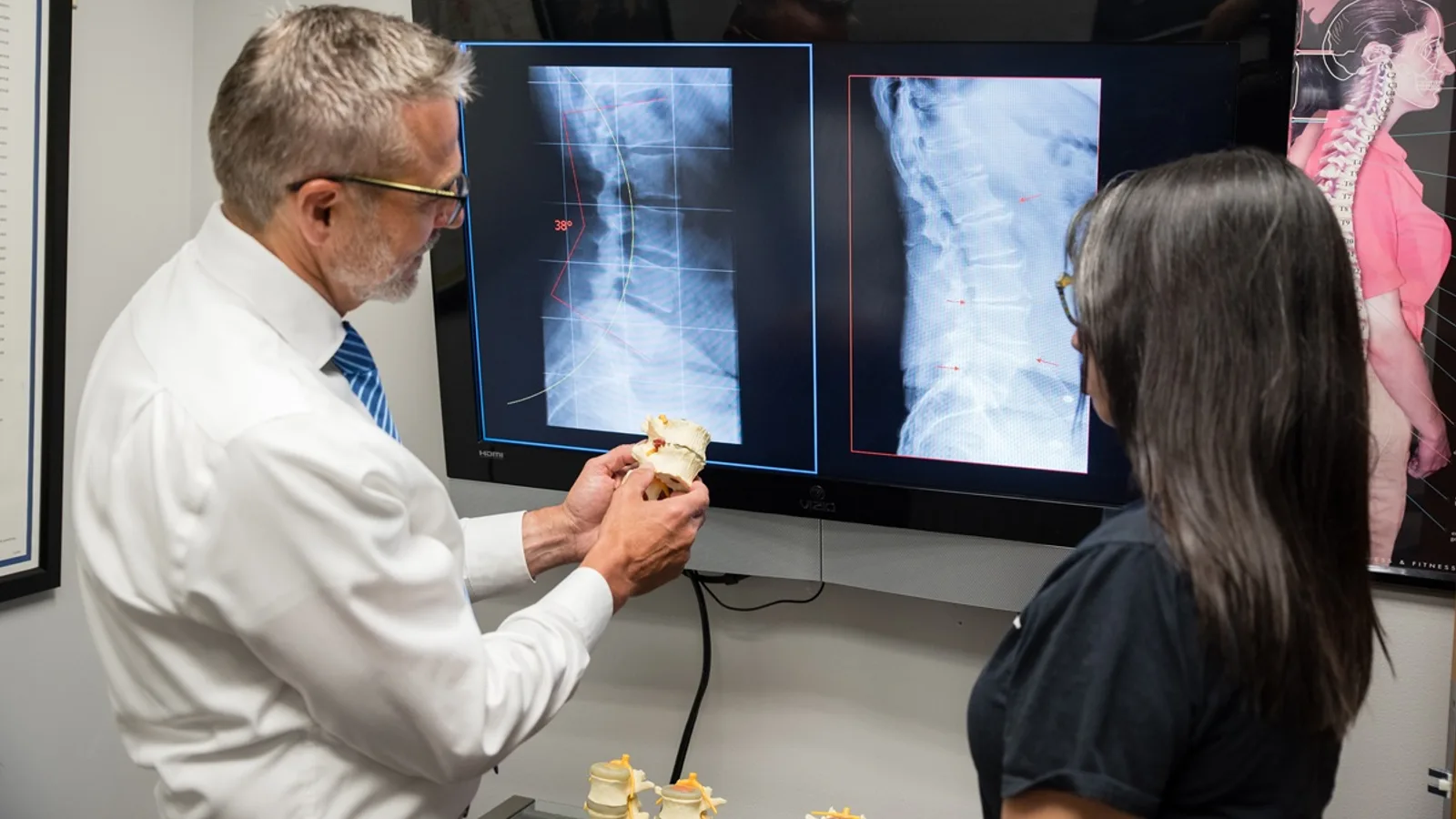
If you've recently been told you have a disc bulge — or you've been living with nagging back or neck pain and wonder if that might be the cause — you're not alone. Here in Minneapolis, many patients come through the doors of Nokomis Chiropractic and Wellness with exactly this concern. A disc bulge can sound intimidating, especially when it comes with a stack of imaging results and unfamiliar terminology. But the good news is that this condition is very common, it's well-understood, and there are effective, non-surgical approaches that can help you feel better and move more freely.
In this article, Dr. Jonathan Olson and the team at Nokomis Chiropractic and Wellness want to walk you through what a disc bulge actually is, what causes it, how it feels, and what your options are for getting relief. Our goal is simple: help you feel informed, not overwhelmed.
What Exactly Is a Disc Bulge?
A disc bulge occurs when one of the soft, cushion-like discs between your vertebrae extends slightly beyond its normal boundary — without fully rupturing. Think of a disc like a jelly-filled donut. When pressure is applied unevenly over time, the outer layer can start to push outward in one direction. The disc hasn't broken open, but it's no longer sitting symmetrically between the vertebrae. This can irritate nearby nerves or the spinal canal itself, which is often what causes pain.
- What Exactly Is a Disc Bulge?
- What Causes a Disc Bulge?
- Signs and Symptoms to Watch For
- How Chiropractic Care Can Help
- Practical Tips for Managing a Disc Bulge at Home
- When to See a Chiropractor
- Myths vs. Facts About Disc Bulges
- Final Thoughts from Nokomis Chiropractic and Wellness
- Frequently Asked Questions
What Causes a Disc Bulge?
Disc bulges don't usually happen overnight. In most cases, they develop gradually as the result of repeated stress on the spine over months or years. Understanding the root causes can help you make changes that support long-term spinal health.
One of the most common contributors is poor posture — especially the kind that comes from sitting for long hours at a desk or looking down at a phone. When the spine is held in a forward-flexed position for extended periods, the front of the disc absorbs disproportionate pressure. Over time, this pushes the disc material toward the back, where nerves are located. Here in Minneapolis, Dr. Jonathan Olson sees this pattern regularly in office workers and remote employees who spend most of their day seated.
Age-related disc degeneration also plays a significant role. As we age, our discs naturally lose some of their water content and become less resilient. This makes them more susceptible to bulging under ordinary daily stress. It doesn't mean you've done anything wrong — it's simply a part of how the spine ages. That said, lifestyle factors like repetitive heavy lifting, sudden twisting movements, obesity, and even smoking (which reduces disc nutrition) can accelerate this process.
Trauma, such as a car accident or a fall, can also cause or worsen a disc bulge. Sometimes a disc bulge is discovered incidentally on an MRI ordered for a different reason — which is a good reminder that imaging findings don't always match the level of symptoms a person experiences.
Signs and Symptoms to Watch For
Not every disc bulge causes noticeable symptoms. However, when it does, the discomfort can range from mildly bothersome to significantly disruptive. The location of the bulge in your spine determines where you'll feel it.
A disc bulge in the lower back (lumbar spine) often causes pain in the low back itself, along with possible pain, tingling, or numbness that travels down through the buttocks, into the thigh, and sometimes all the way down to the foot. This radiating pattern is commonly associated with sciatic nerve irritation. Patients at Nokomis Chiropractic and Wellness in Minneapolis frequently describe it as a deep, burning, or shooting sensation.
When a disc bulge occurs in the neck (cervical spine), pain may radiate into the shoulder, arm, or hand. You might notice weakness in your grip, or a persistent ache that worsens when turning your head. Disc bulges in the mid-back (thoracic spine) are less common but can cause pain that wraps around the ribcage or affects the chest area.
Other symptoms to be aware of include muscle spasms near the affected area, stiffness that makes it hard to bend or rotate, and discomfort that worsens after sitting or standing for extended periods. Some people also notice that certain movements — like bending forward or coughing — temporarily increase their pain.
How Chiropractic Care Can Help
Chiropractic care is widely recognized as a frontline, conservative approach for managing disc bulges and the associated pain they cause. Organizations like the American College of Physicians and the National Institutes of Health's National Center for Complementary and Integrative Health acknowledge spinal manipulation and manual therapy as evidence-informed options for back pain management. The goal is never to "pop" a disc back into place — that's not how it works — but rather to restore proper spinal mechanics, reduce nerve irritation, and support the body's natural healing process.
At Nokomis Chiropractic and Wellness, Dr. Jonathan Olson takes a thorough, individualized approach to each patient. Care typically begins with a detailed health history and physical examination to understand not just the disc itself, but the patterns of movement, posture, and lifestyle that may be contributing to the problem. Imaging may be reviewed if already available, or a referral may be made when necessary.
Chiropractic adjustments — also called spinal manipulative therapy — involve applying gentle, controlled force to specific spinal joints. This can help restore motion to joints that have become restricted, reduce muscle tension, and decrease the mechanical stress on the affected disc. Research suggests that spinal manipulation may be effective in reducing pain and improving function for patients with disc-related low back pain when applied appropriately.
Beyond adjustments, the care team at Nokomis Chiropractic and Wellness may incorporate soft tissue therapy, therapeutic exercises, and postural retraining. These elements work together to address not just the symptom, but the underlying mechanical dysfunctions that allowed the disc bulge to develop in the first place. Care is always adapted to your comfort level and health history — nothing is rushed or forced.
Practical Tips for Managing a Disc Bulge at Home
While professional care is important, there are meaningful things you can do between appointments — or even before your first visit — to support your spine and ease discomfort. These recommendations are general in nature and should always be discussed with your provider before starting anything new, especially if your symptoms are severe.
Movement is medicine. One of the most helpful things you can do is avoid prolonged static positions. If you sit at a desk, try to get up and move for a few minutes every 30 to 45 minutes. Gentle walking is often well-tolerated and helps keep circulation moving to the disc tissue. Avoid staying in any one position — sitting, standing, or lying down — for so long that your symptoms worsen.
Be mindful of how you bend and lift. When picking something up from the floor, try to hinge at the hips rather than rounding your lower back. Keep objects close to your body, and avoid twisting at the waist while holding weight. These simple mechanical habits can make a significant difference in how much stress your discs absorb daily.
Sleep position matters, too. Lying on your side with a pillow between your knees is often more comfortable for people with lumbar disc issues. If you sleep on your back, a pillow under your knees can reduce pressure on the lower spine. Try to avoid sleeping flat on your stomach, which places your cervical and lumbar spine in an awkward, extended position for hours at a time.
Finally, stay hydrated and maintain a healthy weight. Spinal discs are largely composed of water, and hydration supports their ability to absorb shock. Excess body weight places additional compressive load on the lumbar spine, which can worsen disc symptoms over time.
When to See a Chiropractor
If you've been dealing with back or neck pain for more than a few days — especially if it's accompanied by tingling, numbness, or weakness in your arms or legs — it's worth getting evaluated. Many people in Minneapolis wait too long before seeking care, hoping the pain will simply go away. While mild disc irritation can sometimes resolve on its own, persistent or worsening symptoms are a signal that your spine needs attention.
Dr. Jonathan Olson at Nokomis Chiropractic and Wellness is a great first call for conservative evaluation of these symptoms. Chiropractic care is especially appropriate when pain is recent or recurring, when imaging has already confirmed a disc bulge, or when you're trying to avoid surgery or long-term medication use.
However, there are certain warning signs that require immediate medical attention and go beyond what chiropractic care alone should address. These include loss of bladder or bowel control, severe progressive weakness in a limb, numbness in the groin or inner thigh area (sometimes called saddle anesthesia), or severe neurological symptoms that are rapidly worsening. These can indicate a more serious spinal emergency and should be evaluated in an emergency setting without delay. At Nokomis Chiropractic and Wellness, we always prioritize your safety and will refer you appropriately when needed.
| Symptom / Situation | Recommended Action |
|---|---|
| Mild to moderate back or neck pain lasting more than a few days | Schedule a chiropractic evaluation |
| Tingling or numbness radiating into an arm or leg | See a chiropractor; imaging may be recommended |
| Stiffness and reduced range of motion | Chiropractic care and therapeutic exercise appropriate |
| Confirmed disc bulge on MRI with ongoing pain | Conservative chiropractic care is a recommended first step |
| Loss of bladder or bowel control | Seek emergency medical care immediately |
| Rapidly progressing limb weakness | Emergency medical evaluation required |
Myths vs. Facts About Disc Bulges
Myth: A disc bulge means you need surgery.
Fact: The vast majority of disc bulges respond well to conservative, non-surgical care. Surgery is typically considered only after extended conservative treatment has failed and significant neurological deficits are present. Many people recover fully without any surgical intervention, and organizations like NICE and the ACP recommend trying conservative approaches first.
Myth: If you have a disc bulge on an MRI, it must be causing your pain.
Fact: Research has shown that disc bulges and other spinal changes are frequently found on MRIs of people who have no pain at all. Imaging findings must always be interpreted alongside a patient's actual symptoms and clinical examination. A bulge seen on a scan doesn't automatically explain a patient's pain — and conversely, significant pain can occur even with minimal imaging findings.
Myth: Rest is the best treatment for a disc bulge.
Fact: Extended bed rest is generally not recommended for disc-related pain. Evidence suggests that staying gently active, within a comfortable range of motion, supports recovery better than prolonged inactivity. Movement helps maintain disc nutrition, reduces muscle deconditioning, and prevents the cycle of stiffness and pain from worsening.
Myth: Chiropractic adjustments will make a disc bulge worse.
Fact: When performed by a trained chiropractor who has thoroughly evaluated the patient, spinal manipulation is considered a safe and appropriate option for many types of disc-related back pain. Dr. Jonathan Olson at Nokomis Chiropractic and Wellness carefully screens every patient before any treatment begins to ensure the approach is right for their specific situation.
Myth: A disc bulge is a permanent, unfixable problem.
Fact: Many people experience significant improvement — and in some cases complete resolution — of their disc bulge symptoms with appropriate care, lifestyle changes, and time. The human body has a remarkable capacity to heal and adapt. While some structural changes may persist on imaging, the functional and pain-related impact can often be dramatically reduced.
Final Thoughts from Nokomis Chiropractic and Wellness
Living with a disc bulge doesn't have to mean living with constant pain. As a Minneapolis community practice, Nokomis Chiropractic and Wellness is here to help residents of the Twin Cities area understand their spinal health and take meaningful steps toward feeling better. Dr. Jonathan Olson believes that informed patients make better decisions — and that starts with cutting through the confusion and fear that so often surrounds a disc diagnosis.
Whether you've just received imaging results that mentioned a disc bulge, or you've been managing back pain for years without a clear answer, we'd love the opportunity to evaluate your situation and help you chart a path forward. Our approach is thorough, compassionate, and rooted in the kind of care we'd want for our own families. You deserve to understand what's happening in your body — and to know that you have options.
If you're in Minneapolis or the surrounding area and you're looking for conservative, drug-free care for a disc bulge, we welcome you to reach out to Nokomis Chiropractic and Wellness. You don't have to navigate this alone.
Frequently Asked Questions
How long does it take for a disc bulge to heal?
Recovery timelines vary depending on the severity of the bulge, the location in the spine, and how quickly care is initiated. Many patients begin to notice improvement within a few weeks of starting conservative treatment, though full recovery may take several months. Consistency with care and home recommendations makes a significant difference in outcomes.
Is a disc bulge the same as a herniated disc?
These terms are related but distinct. A disc bulge refers to a disc that is extending outward without the inner material breaking through the outer layer. A herniated disc (sometimes called a disc rupture or prolapse) involves the inner gel-like material actually pushing through a crack in the outer layer. Both can cause similar symptoms, but a herniation is generally considered more severe.
Can a disc bulge go away on its own?
In some cases, yes — especially with mild bulges and appropriate activity modification. The body has natural mechanisms for reducing disc-related inflammation, and some bulges do reduce in size over time. However, without addressing the underlying mechanical issues, the problem can persist or recur. Professional evaluation helps determine the right course of action.
Can I exercise with a disc bulge?
In most cases, gentle, guided movement and exercise are not only safe but encouraged. The key is knowing which movements are appropriate for your specific situation, as some exercises can aggravate disc symptoms while others promote healing. Dr. Jonathan Olson at Nokomis Chiropractic and Wellness can provide guidance tailored to your condition.
Will I need an MRI to get chiropractic care for a disc bulge?
Not necessarily. Many patients receive effective chiropractic care based on a thorough clinical evaluation without imaging. If your history and physical exam suggest a disc bulge, care can often begin right away. An MRI may be recommended if symptoms are severe, not responding to initial care, or if more detailed information is needed to guide treatment decisions.
Is chiropractic care covered for disc bulge treatment?
Coverage varies depending on your insurance plan and benefits. We recommend contacting your insurance provider directly to understand your chiropractic benefits. The team at Nokomis Chiropractic and Wellness can help answer questions about the care process itself during your visit.
TL;DR — Key Takeaways
- A disc bulge happens when a spinal disc extends beyond its normal boundary, potentially irritating nearby nerves and causing pain, tingling, or numbness.
- Common causes include prolonged poor posture, age-related disc changes, repetitive stress, and trauma — all of which Dr. Jonathan Olson and the team at Nokomis Chiropractic and Wellness regularly address.
- Chiropractic care, including spinal adjustments and therapeutic exercise, is a well-supported conservative treatment option that can reduce pain and improve spinal function.
- Simple daily habits — like staying active, lifting properly, and sleeping in a spine-friendly position — can support your recovery and help prevent recurrence.
- Most disc bulges do not require surgery, but certain emergency symptoms (like loss of bladder control or rapidly worsening weakness) require immediate medical attention.